Route 2 Taiwan Walk of Fame

From the banks of the Tamsui River to the Northern Coastal Highway,
this route holds the tranquility of an old town and the grandeur where river meets sea.
The three great sights of mountain, sea, and sky
are reflected on the water's surface,
captured through the lens
in stories that belong to Taiwan's North Coast.
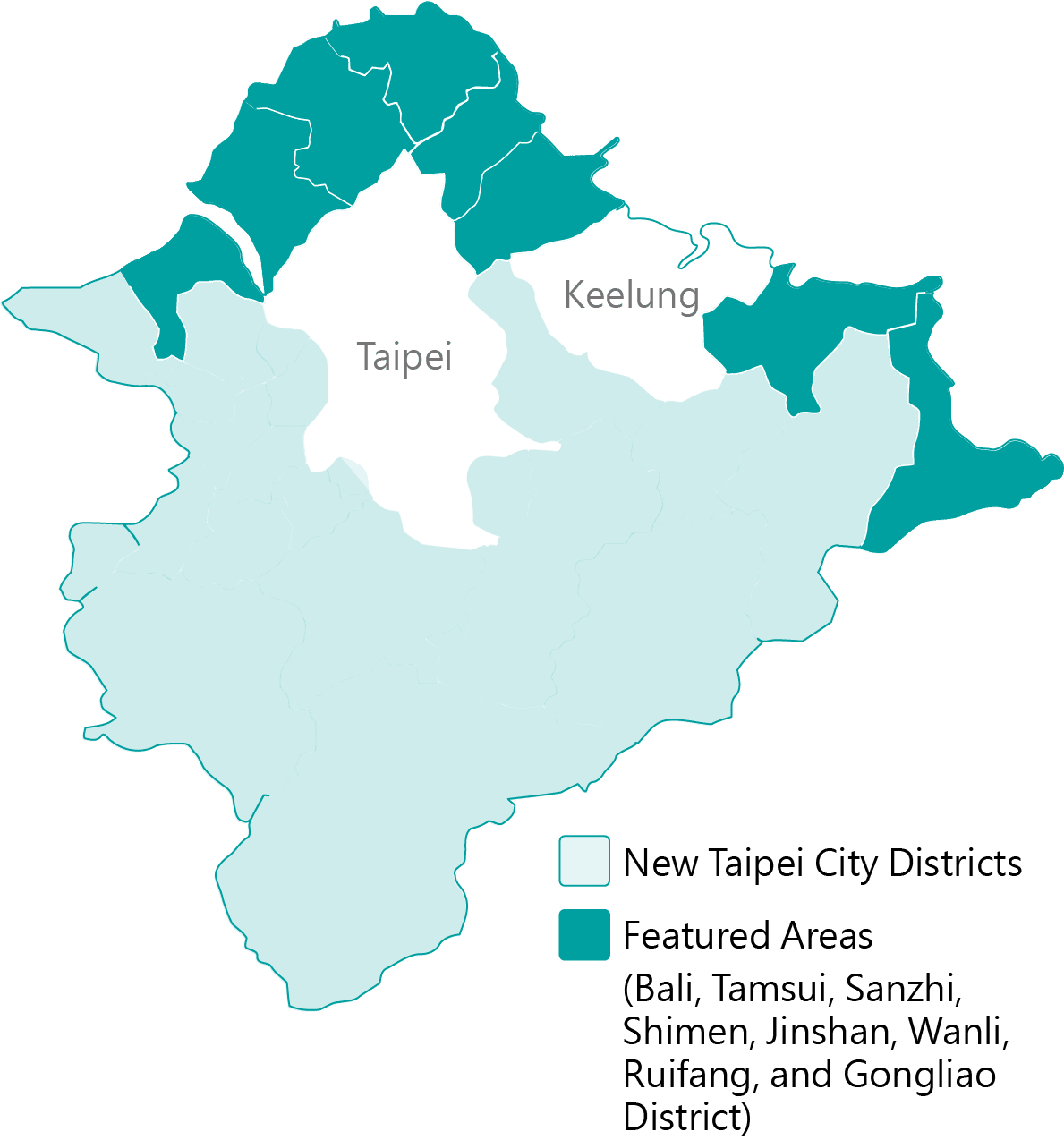
Itinerary Guide
- Traditional stone houses can be seen throughout Magang Fishing Port, along with a spectacular wave-cut platform; it is also one of the filming locations for the series Light the Night.
- Tamsui Fort San Domingo is a two-story red-brick building whose vermillion facade carries the atmosphere of the Dutch and Spanish era; the dramas Gold Leaf and Seqalu: Formosa 1867 were both filmed here.
- Linshanbi Wooden Trail is built along the coast; in the film Secret, Ye Xianglun rides a bicycle along this coastal trail to take Lu Xiaoyu home.
- The temple fair performance in David Loman 2 was filmed at Fuyou Temple, located on the bustling Zhongzheng Old Street; the temple preserves many original Qing dynasty artifacts and has a distinctive architectural layout.

Light the Night
Magang Fishing Port

Man In Love
Sanzhi District Farmers' Association

Port of Lies
Bitou Police Station
Food Recommendations

While enjoying the coastal highway's ocean views, great food is essential too—
Wanli's tender, delicately textured crab or Gongliao's firm, sweet abalone,
or even a classic combination of dishes from Tamsui Old Street,
are all flavors unique to the Mountain and Sea Line!

Bali Red Tortoise Cake
Ang Ku Kueh (Red Tortoise Cake) is a traditional rice-based treat and one of the offerings commonly used in worship. In Bali, there is a long-established shop that locals always visit to buy Ang Ku Kueh during festivals.The shop sits across from Liao Tianding Temple. According to folklore, the righteous outlaw Liao Tianding had a loyal companion named Ang Ku, and visitors have come to associate this legendary figure with Ang Ku Kueh, turning the cake into a must-try local delicacy. Made purely from glutinous rice, the chewy, springy Ang Ku Kueh has also become a favorite gift during festivals.

Tamsui A-gei and Fish Ball Soup
A-gei, drizzled with sweet chili sauce, is packed with glass noodles soaked in savory broth, and pairs perfectly with a steaming bowl of fish ball soup. The oval fish balls, made from fresh fish paste, are filled with juicy minced pork, capturing the simple flavors of a fishing village — an essential combination to try in Tamsui.

Sanzhi Xiaolongbao
Sanzhi, on the North Coast, is home to several xiaolongbao shops that draw food lovers, including one popular spot nicknamed the 'Din Tai Fung of Sanzhi,' known for its long lines. Bite-sized with thin skins and flavorful fillings, these xiaolongbao burst with broth when bitten into, making them a must-try after exploring the North Coast.

Shimen Zongzi (Rice Dumpling)
Residents of Shimen District once offered zongzi in worship, and according to legend, the temple's deity revealed miracles to protect the people, which helped spread the fame of Shimen zongzi far and wide. Outside Shibawanggong Temple, numerous vendors gather, offering both the distinct, separate-grain Northern-style zongzi and the soft, chewy Southern-style zongzi, each with its own loyal following.

Jinshan Duck Meat
A visit to Jinshan Old Street calls for a duck meat feast. The sliced duck, drizzled with rich duck-oil broth, is firm and satisfying without being tough, savory and sweet without any greasiness. There is even a hidden menu item, salt-and-pepper duck, that is not listed on the menu — it must be pre-ordered to enjoy.

Wanli Crab
As much as 80 percent of the sea crab on Taiwan's dinner tables comes from fishermen in Wanli, which is how Wanli Crab got its name. It represents Taiwan's three most economically valuable crab species and has long been a sought-after local ingredient, drawing many visitors who come specifically to taste it.

Jiufen Taro Balls
Jiufen is practically a battleground for taro balls, where the ratio of starch to taro determines the texture that sets each shop apart. Chewy taro balls come paired with a variety of toppings and sweet soups — tofu pudding in summer, ginger soup in winter — offering endless combinations so that everyone can find their perfect flavor.

Gongliao Abalone
Gongliao's unique topography has given rise to a thriving abalone industry. Many fishermen use the clear currents and biodiverse intertidal zones to raise abalone in semi-open, flow-through seawater systems, producing abalone with firm, sweet flesh that is widely loved.
 Search for Shops